
Reaction to Fire Testing
Reaction to fire tests are a set of procedures used to evaluate how materials and products react when exposed to heat sources or flame.
The purpose of these tests is to analyze:
• How quickly materials ignite.
• How much heat it releases during combustion.
• How it behaves during combustion.
These assessments are essential to establish preventive measures and safety standards in various industries such as construction, transportation or consumer products.
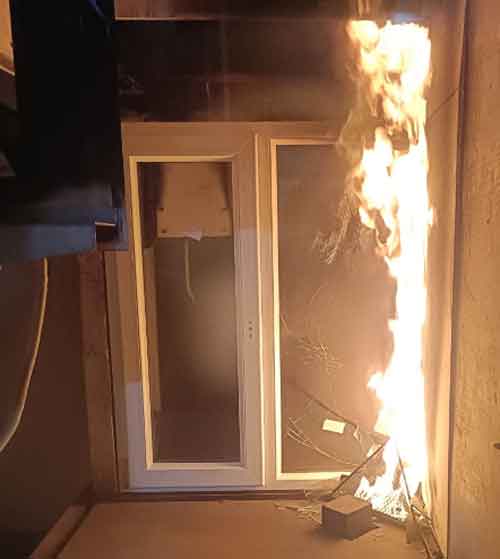
Classification of products/materials in Function of Reaction to Fire
According to the European standard EN 13501-1:2019, construction products/materials are classified according to their fire behavior in seven fire reaction classes
• A1 and A2: Non-combustible products/materials, which do not fuel the fire and contribute very little to the spread of the fire.
• B, C, D, E: Combustible products/materials that vary in performance. For example, class B represents materials that burn but with a limited contribution to fire development, while class E indicates materials with a higher combustibility.
• F: Products/materials that have not been tested or do not offer a specific performance in the event of a fire.
To add an additional level of protection and assessment, secondary classifications are also used:
• s1, s2, s3: Indicates the level of smoke produced during combustion. s1 indicates a low level of smoke emission, and s3 no restrictions.
• d0, d1, d2: These classifications indicate the production of incandescent droplets or particles. d0 means that the materials do not produce incandescent droplets or particles, while d2 means that they are produced and can contribute to the spread of fire.
Testing Methods and Important Parameters
Reaction to fire tests are complex and used to evaluate the behavior of materials under various conditions. The most relevant test methods include:
1. EN 13823+A1: Testing of construction products/materials, with the exception of floors, exposed to the thermal action of a single burning item (Single Burning Item - SBI).
2. EN ISO 9239-1: Tests for floors, evaluating fire behavior using a radiant heat source.
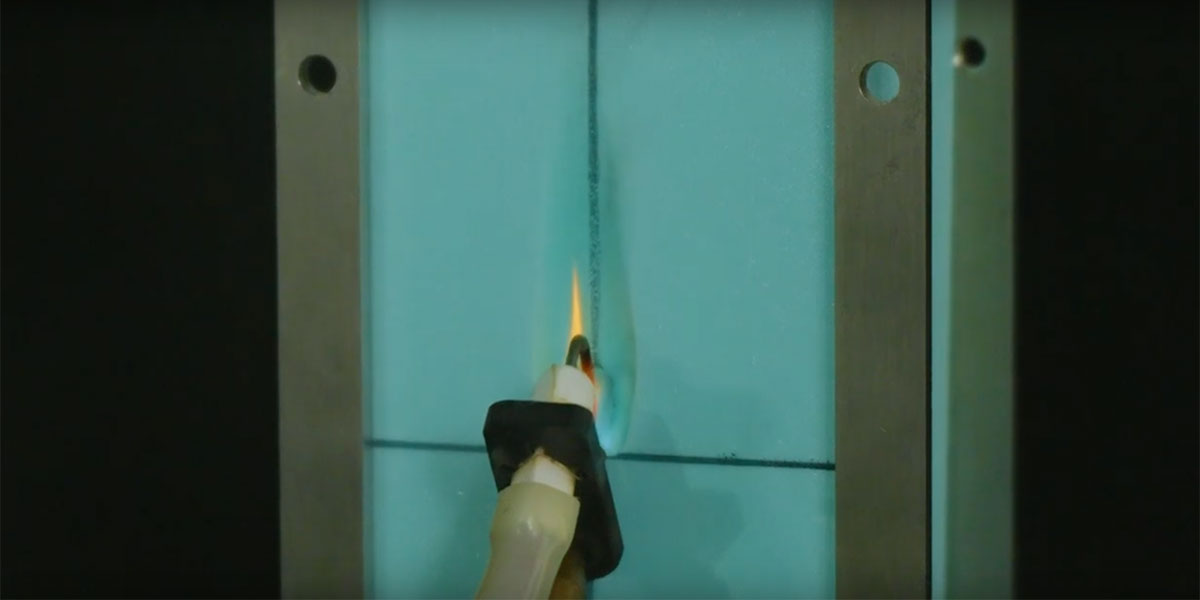
3. EN ISO 11925-2: Flammability tests by exposing materials directly to a small flame.
4. EN ISO 1716: Determination of gross heat of combustion (calorific value), an essential test to understand the energy potential of materials.
5. EN ISO 1182: Non-combustibility testing of products, relevant to materials that should not contribute to a fire.
Essential parameters used in Reaction to Fire Tests
In fire reaction tests, certain technical indicators are used to describe the behavior of materials:
• FIGURE (W/s): Rate of fire growth, measured against heat thresholds such as 02 MJ or 04 MJ.
• THR 600 s (MJ): Total heat released by the material in the first 600 seconds.
• SMOGRA (m2/s2): Smoke growth rate, an important indicator to assess how dangerous the atmosphere becomes during a fire.
• TSP 600 s (m2): Total smoke emission in a period of 600 seconds.
• Incandescent droplets/particles: Measure the time that the incandescent droplets remain lit after falling (≤ 10 seconds or > 10 seconds).
Types of Fire Reaction Tests
1. Single Burning Item (SBI) Reaction to Fire Tests
These tests simulate the exposure of a material to the thermal action of a single burning object, evaluating how the material fuels the fire and contributes to the spread of the fire.
2. Fire Reaction Tests with a Radiant Heat Source
These tests are specific to floors and establish their behavior when exposed to a radiant heat source. It also tests flame propagation under fire conditions.
3. Flammability Tests
These tests evaluate how easily materials can ignite when exposed to a small flame without radiation. It is essential to prevent fire risks, especially in environments where materials are exposed to open fire sources.
4. Upper Combustion Heat Tests (Calorific Value)
These tests determine how much energy a material releases during combustion, an essential aspect of assessing the potential to fuel a fire.
5. Incombustibility Tests
These tests determine whether or not a material is non-combustible, that is, whether it does not contribute at all to the spread of a fire.
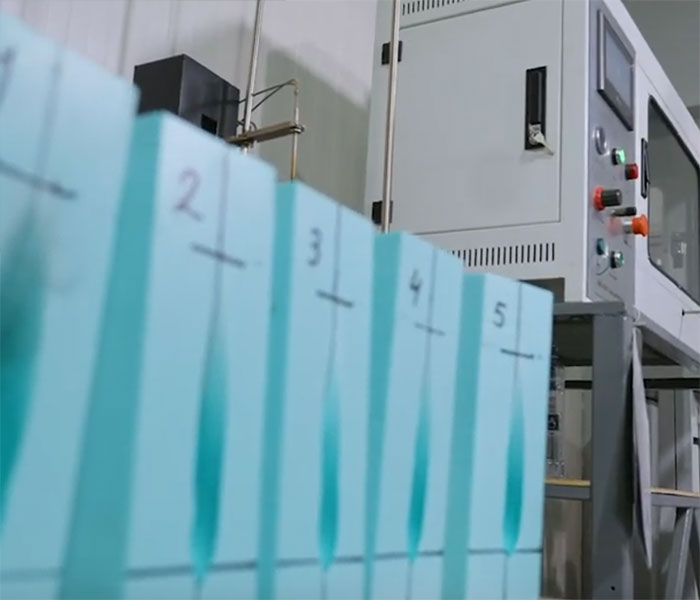
Fire testing of materials plays a crucial role in ensuring safety in all fields. It is essential for operational safety, protecting lives, property and complying with legal regulations. These tests help create safer and more fire-resistant environments by providing confidence in the use of tested and certified materials.